 EN
EN


Vehicle recovery situations can be stressful, unpredictable, and sometimes dangerous. Whether a truck has slid off a muddy trail, a car is stuck in a ditch, or a vehicle has become immobilized after a minor off-road mishap, knowing the right tool to use matters enormously. towing straps are among the most practical and widely used recovery tools available, but they are not the right solution in every scenario. Understanding exactly when towing straps should be deployed helps operators recover vehicles efficiently while minimizing risk to people and equipment.
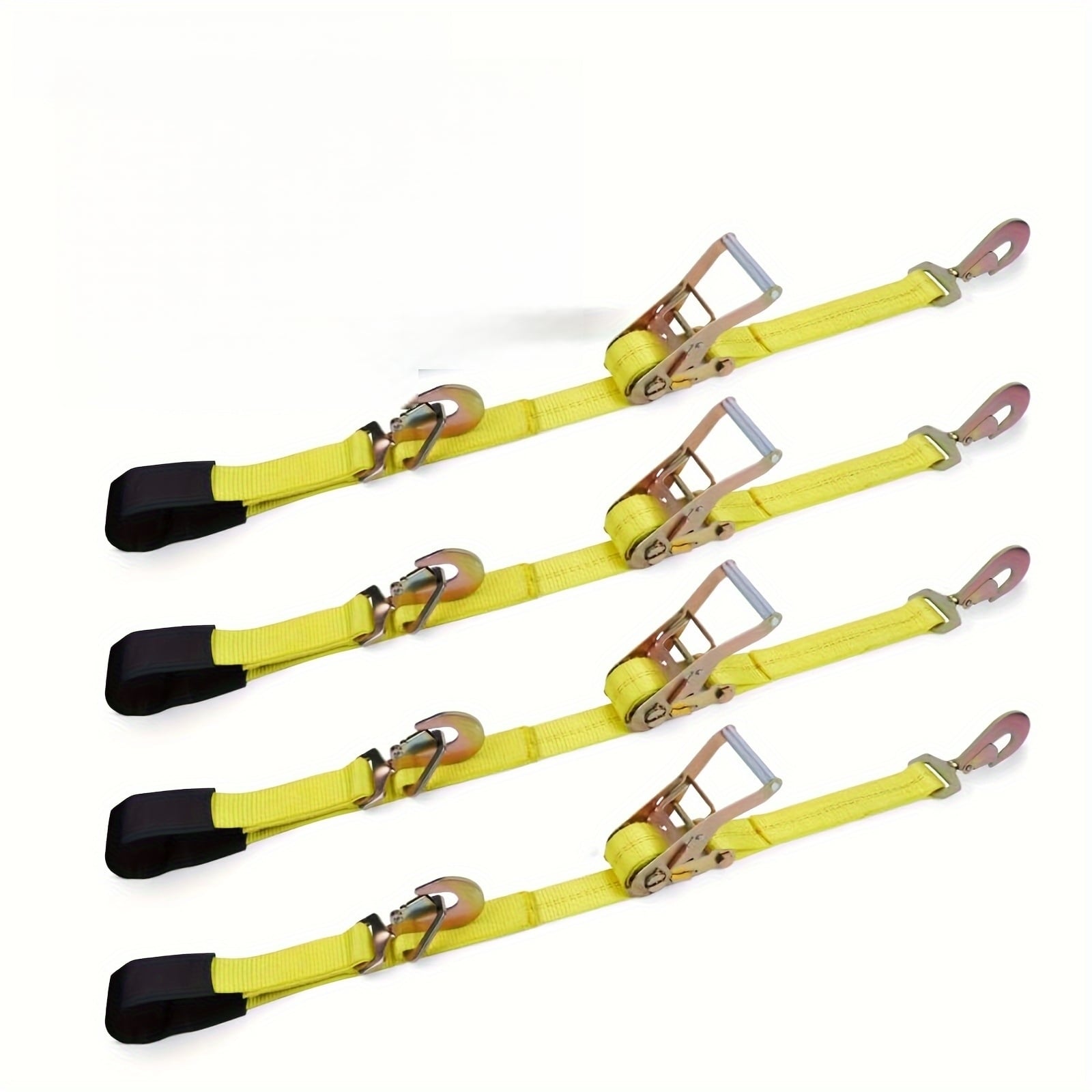
Towing straps are flat or twisted polyester webbing tools designed to connect a stuck or disabled vehicle to a recovery vehicle. They transfer pulling force to drag or extract a vehicle from a compromised position. Unlike chains or cables, towing straps offer a degree of flexibility and are less likely to cause sudden shock loads under the right conditions. However, choosing the correct moment to use towing straps requires understanding the terrain, the vehicle weights involved, and the nature of the recovery scenario itself.
Scenarios Where Towing Straps Are the Right Choice
Soft Ground and Off-Road Recovery
One of the most common and appropriate uses of towing straps is in soft-ground recovery situations. When a vehicle becomes stuck in mud, sand, snow, or loose gravel, towing straps provide the tensile strength needed to pull the vehicle free without damaging its frame or tow points. In these conditions, towing straps perform well because the resistance is gradual rather than sudden. The recovery vehicle applies steady forward force, and the towing straps transfer that energy reliably across the connection point.
Towing straps are especially practical in off-road environments where winches may not be accessible and chains would be unnecessarily rigid. A high-quality set of towing straps rated at appropriate load capacity, such as 10,000 lbs or higher, gives operators the confidence to handle light to medium recovery tasks safely. Always match the towing straps rating to the gross vehicle weight of the heaviest vehicle involved in the recovery.
Short-Distance Vehicle Towing on Flat Terrain
Towing straps are also well-suited for moving a disabled vehicle a short distance on flat or gently sloped terrain. If a vehicle has run out of fuel, suffered a mechanical failure, or needs to be repositioned without a flatbed truck available, towing straps allow one vehicle to pull another to a safer location. This use case requires that the disabled vehicle retain functional steering and braking so the operator can maintain control during the tow.
In this situation, towing straps should only be used for short, controlled movements at low speeds. The driver of the vehicle being towed must remain attentive, and both vehicles must maintain clear communication throughout. Towing straps used in this context should be attached to proper recovery points, not bumpers or suspension components, to prevent damage and ensure safety.
Conditions That Determine When Towing Straps Are Appropriate
Vehicle Weight and Load Capacity Compatibility
The single most important condition that determines when towing straps should be used is whether their rated capacity matches or exceeds the weight of the vehicles involved. Towing straps have specific working load limits and break strength ratings. Using towing straps with insufficient capacity for the load is dangerous and can cause catastrophic strap failure. Before deploying towing straps, operators must verify the combined weight scenario and confirm that the towing straps selected are rated appropriately.
For example, towing straps rated for 10,000 lbs are suitable for recovering standard passenger vehicles and light trucks. Heavier equipment such as large SUVs, commercial vans, or loaded trailers may require towing straps with significantly higher ratings. The weight compatibility check is not optional. It is a non-negotiable step before towing straps are ever connected between two vehicles.
Secure and Designated Attachment Points
Towing straps should only be used when both the recovery vehicle and the stuck vehicle have secure, manufacturer-designated tow hooks, D-rings, or recovery points available. Attaching towing straps to non-structural parts of a vehicle, such as axle covers, decorative trim, or bumper edges, dramatically increases the risk of equipment failure and injury. The integrity of the connection point is just as critical as the strength of the towing straps themselves.
When proper attachment points are present and accessible, towing straps can be rigged quickly and safely. When such points are absent or obstructed, operators should consider alternative recovery methods before risking strap failure. Towing straps perform best when every element of the recovery setup, including hooks, D-rings, and attachment hardware, is rated to handle the expected load.
When Towing Straps Should Not Be Used
Steep Inclines and Uncontrolled Descents
Towing straps are not suitable for recovering vehicles on steep inclines where gravity creates a continuous downhill load on the connection point. In these situations, towing straps can stretch under sustained tension and may not hold the vehicle securely. A winch with a locking mechanism or a mechanical anchor system provides much greater control and safety on severe grades. Using towing straps on steep slopes increases the risk of sudden release and vehicle rollback.
Operators should assess the angle of the terrain before choosing towing straps. If the slope exceeds what can be managed with steady, low-speed traction, towing straps are not the right tool for that scenario. Matching the recovery tool to the terrain type is a fundamental principle of safe vehicle recovery.
Situations Requiring Elastic Kinetic Energy
Standard towing straps are designed for static pulls and steady-load towing. They are not kinetic recovery straps, which are engineered to stretch and release energy to jerk a deeply embedded vehicle free. If a vehicle is deeply stuck and needs a dynamic kinetic pull, using standard towing straps in that role can result in snap-back, strap failure, or connection point damage. Recognizing this distinction helps operators select the correct equipment for the specific recovery type needed.
FAQ
Can towing straps be reused after a heavy recovery pull?
Towing straps can often be reused if they show no visible signs of fraying, cuts, or structural damage after a recovery. Always inspect towing straps carefully before and after each use. If the webbing is worn, discolored, or weakened in any area, retire those towing straps immediately and replace them.
What length of towing straps is best for vehicle recovery?
For most vehicle recovery situations, towing straps between 15 and 30 feet offer a practical balance between connection distance and control. Longer towing straps allow more room for the recovery vehicle to maneuver, while shorter towing straps reduce slack management challenges on flat terrain.
Are towing straps safe to use in wet or icy conditions?
Towing straps made from polyester webbing maintain much of their strength when wet and are generally safe to use in rain or snow. However, operators should reduce recovery speeds and take extra care when attaching towing straps in icy conditions to prevent slipping and ensure a secure connection at all hook points.